Hybrid solar systems
A hybrid solar system integrates three primary components: a photovoltaic generator, a battery energy storage system (BESS), and a grid connection or a backup generator. This configuration allows for energy production from solar panels, storage of excess energy in batteries, and access to the grid (or an auxiliary generator) when needed. It offers energy security, self-sufficiency, and the ability to manage power fluctuations more effectively than either on-grid or off-grid systems alone.
The global pursuit of sustainable energy solutions has placed solar energy at the forefront of clean power technologies. However, limitations associated with both stand-alone (off-grid) and grid-tied (on-grid) solar systems—such as intermittency and lack of storage—have necessitated the development of more versatile energy configurations. Hybrid solar systems, which combine solar PV with energy storage and optional grid connectivity, provide a balanced solution capable of delivering consistent energy, reducing grid dependency, and enhancing energy autonomy.
Key components:
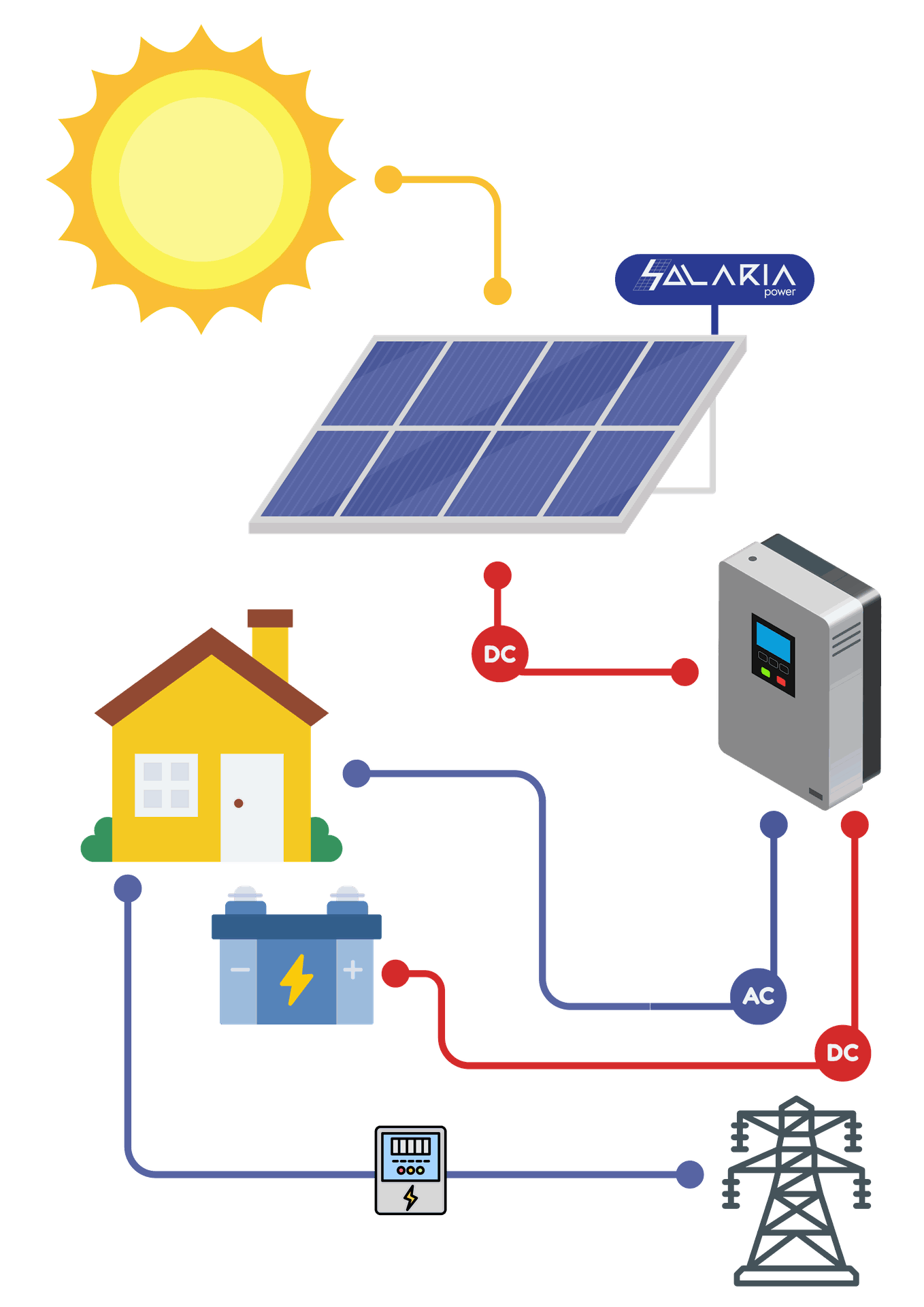
Photovoltaic Panels: These convert solar irradiance into direct current (DC) electricity through the photovoltaic effect. Panel selection, orientation, and efficiency directly impact system output.
Hybrid Inverter (Multi-Mode Inverter): Acts as the control hub, converting DC to alternating current (AC), managing battery charging/discharging, and balancing power flows between the solar array, batteries, and the grid.
Battery Storage System: Stores excess solar energy for use during periods of low irradiance or grid outages. Battery types include lithium-ion, lead-acid, and emerging technologies such as flow batteries.
Grid Connection or Backup Generator: Allows for energy import when both solar and storage are insufficient, and in some cases, surplus energy can be exported to the grid under net metering or feed-in tariffs.
Energy Management System (EMS): An optional but increasingly critical component that monitors and optimizes system performance, improving energy efficiency and extending component lifespans.
Here is a simplified illustration for the Hybrid solar system:
Operational mechanism:
During sunny periods, solar energy is prioritized for direct consumption. Surplus electricity is stored in batteries. When energy demand exceeds solar generation—such as during nighttime or cloudy days—the stored energy is discharged. If the battery is depleted, the system can draw from the utility grid or engage a diesel or gas-powered generator (in remote or unreliable-grid areas). The energy flow is dynamically managed, with smart algorithms and hybrid inverters ensuring optimal utilization of solar, storage, and grid inputs.
Advantages:
Energy Reliability: Ensures power supply continuity even during grid outages or variable solar generation.
Energy Independence: Reduces dependency on external electricity sources while maintaining grid access as a safety net.
Load Management: Shifts energy usage to peak solar generation times, minimizing electricity costs and grid demand charges.
Grid Interaction: Allows for flexible grid participation, including exporting surplus energy or operating in "island mode" during blackouts.
Environmental Impact: Reduces carbon emissions by minimizing fossil fuel use in favor of solar-based generation.
Applications:
Residential Use: Homes seeking backup power and lower electricity bills through net metering and time-of-use optimization.
Commercial and Industrial Facilities: Businesses with critical power needs (e.g., data centers, hospitals, factories) that require high energy reliability.
Remote and Islanded Communities: Locations without stable grid access that benefit from the autonomy and flexibility of hybrid systems.
Public Infrastructure and Microgrids: Schools, clinics, and community centers, especially in developing regions, where hybrid systems support energy access and resilience.